Japanese vs. European Knives – The Big Comparison
Sharper isn’t always better. An honest comparison of Japanese and European kitchen knives – to help you make the right choice.
A question with no single answer – but a clear recommendation
As a knife maker from Solingen, I’m obviously not neutral. But I’ll try to be honest: Japanese and European knives both have their strengths. The question is which strengths matter more to you.
The key differences
Edge angle and sharpness
Japanese knives are typically ground to a very acute edge angle of 10–15 degrees per side. That makes them extremely sharp – sharper than most European knives. European knives have an edge angle of 15–20 degrees per side, which makes them more robust, but not quite as sharp.
Steel and hardness
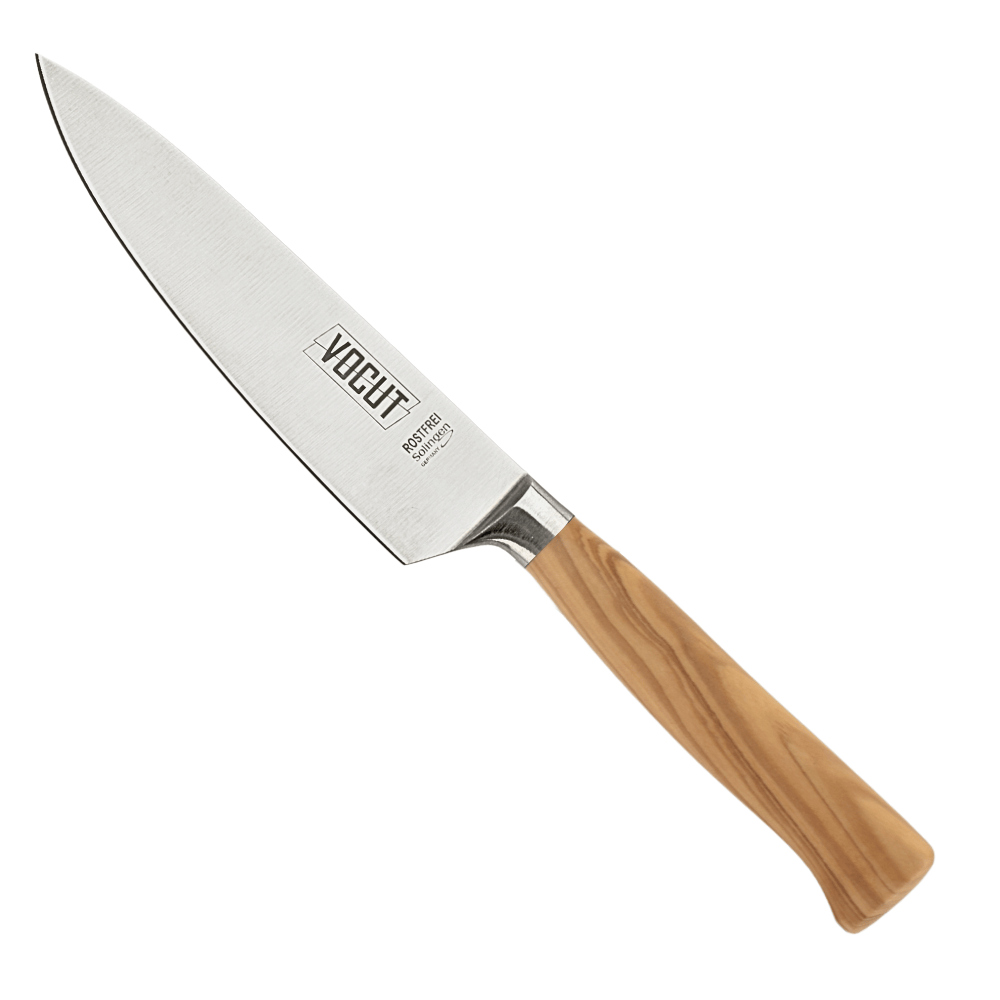
Japanese knives are often made of very hard steel (60 HRC and above). That gives them their sharpness, but also makes them more brittle – they can break or chip if handled incorrectly. European knives such as our VOCUT chef’s knives sit at 56–58 HRC: hard enough for long edge retention, but with enough toughness to cope with somewhat harder use.
Weight and balance
European knives are usually heavier, with a pronounced bolster. Japanese knives are lighter and more evenly balanced. Which feels more comfortable is very personal – and also depends on your build and the size of your hand.
Care
Japanese knives – especially those made of carbon steel or with a high HRC value – need more care. They have to be sharpened on specific whetstones at specific angles. Incorrect care can permanently damage the delicate blade. European knives made of stainless steel are easier to look after and more forgiving.
Which knife is better for whom?
European knife – the better choice for most people
If you cook every day, want a robust, low-maintenance knife and don’t want to spend hours learning sharpening techniques, a quality European knife is the right choice. Especially if you occasionally prepare harder foods (pumpkin, frozen herbs, cutting close to bone).
Japanese knife – for enthusiasts willing to put in the care
If the extreme sharpness of a Japanese knife matters to you, you’re prepared to invest time in proper care, and you mainly cut soft to medium-firm foods, a Japanese knife can take your cooking to a new level. But don’t underestimate the care involved.
What about “Japanese style, European steel”?
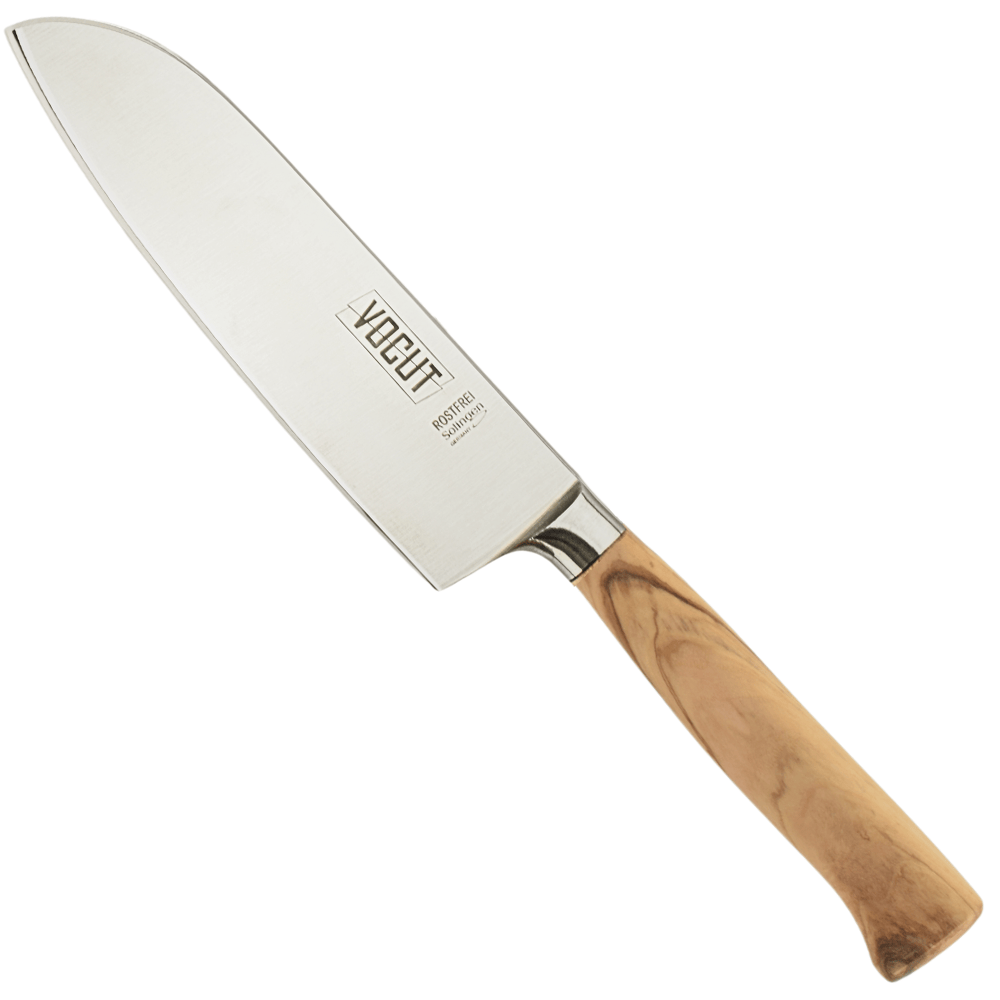
Many European makers now offer knives in Japanese shapes (santoku, kiritsuke, nakiri) made from European steel. This combines the appealing shape of a Japanese knife with the robustness and easy care of European steel – and for many people it’s the best compromise.
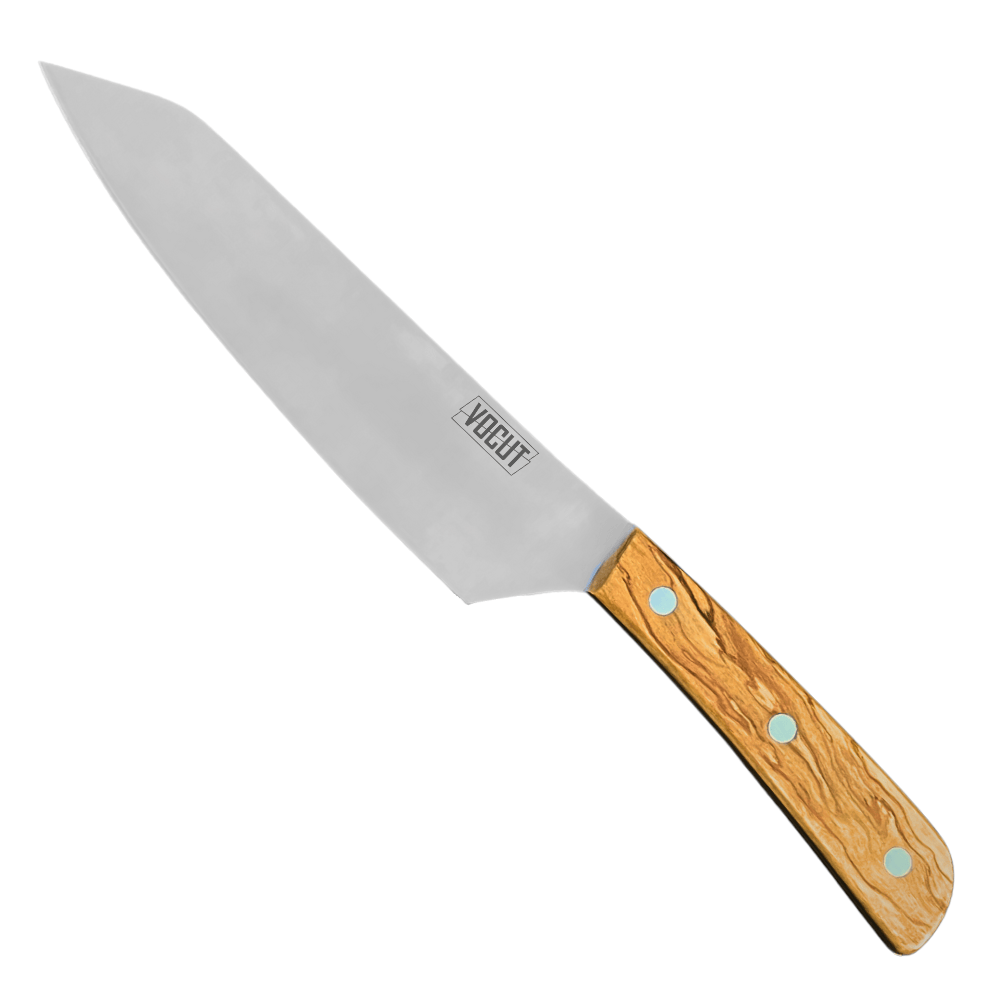
Our VOCUT kiritsuke knives fall into this category. More on this in our Knife Glossary under “Kiritsuke”.
Conclusion
For everyday use in a home kitchen, as a Solingen knife maker I recommend a quality European knife. It’s sharp, robust, easy to care for and, treated properly, will last a lifetime. But if you share a passion for knives and are willing to learn, a Japanese knife can be a real delight.
Any questions? Take a look at our FAQ or write to us directly.