How to Sharpen Kitchen Knives Properly – A Guide
A blunt knife is more dangerous than a sharp one. How to tell honing from sharpening – and which method is right when.
A blunt knife is more dangerous than a sharp one
It sounds paradoxical, but it’s true: a sharp knife cuts precisely, a blunt one slips. If you keep your knives sharp, you don’t just work more efficiently – you work more safely too.
The good news: good knives from Solingen – made with a steel like 1.4116 at 56–58 HRC – hold their edge much longer than cheap knives. And when they do need sharpening, it’s easier than most people think.
Honing or sharpening – what’s the difference?
These two terms are often confused, but they describe two different processes:
- Honing (e.g. with a honing steel) realigns the edge and maintains its sharpness. Very little material is removed. This should be done regularly – ideally after every intensive use.
- Sharpening (e.g. with a whetstone) creates a new edge. Material is deliberately removed. You need this less often – usually only when honing no longer has any effect.
You’ll find more definitions in our Knife Glossary.
The honing steel – for everyday care
The honing steel is the simplest and quickest tool for knife care. A few strokes along the steel realign the blade and maintain its sharpness. A honing steel doesn’t replace sharpening, but it delays it considerably.
How to use it: Hold the knife against the steel at an angle of 15 to 20 degrees and draw it from heel to tip with light pressure. Alternate sides – left, then right side of the blade. About 5 to 8 strokes per side are enough.
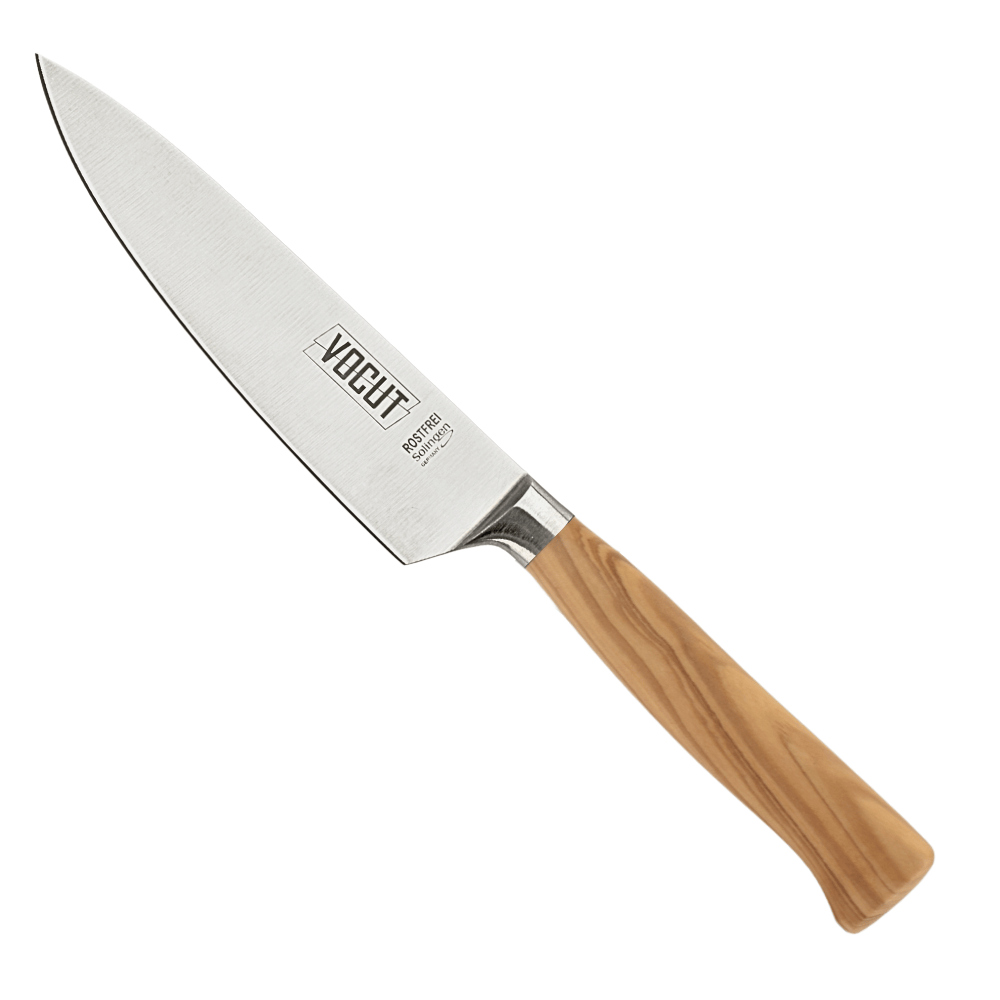
For European knives such as VOCUT chef’s knives, a steel or ceramic honing rod is the best choice. Diamond rods remove too much material and are better suited to sharpening.
The whetstone – for a new edge
When the honing steel no longer has any effect, it’s time for the whetstone. Whetstones come in different grits: coarse (200–400) for repairing damaged blades, medium (800–1000) for basic sharpening, fine (2000–3000) for refining the edge.
The right angle: For European knives (like VOCUT), the ideal sharpening angle is 15 to 20 degrees per side. Holding that angle consistently is the biggest challenge for beginners.
Wet sharpening: Soak the whetstone in water for at least 10 minutes before use. This prevents overheating and gives better results.
How often should I hone and sharpen my knife?
That depends on how intensively the knife is used and what surface you cut on. As a guide:
- Honing steel: After every intensive use, at least once a week.
- Whetstone: Every 2–4 months with daily use. Once a year with occasional use.
A simple check: the paper test. If you can’t cut a sheet of paper cleanly without tearing it, it’s time to sharpen.
The VOCUT resharpening service – free for forged knives
Prefer to leave sharpening to a professional? VOCUT offers a free resharpening service for all forged knives with a straight edge. Send the knife in, have it sharpened, get it back – done.
You’ll find all the details on our resharpening service page.
Conclusion
Regular honing, occasional whetstone sharpening – and our free resharpening service when needed. Look after your knives like this and you’ll always have a sharp tool in your hand.
Any questions? Our FAQ has more answers about knives.
Free resharpening service – all forged VOCUT knives are resharpened free of charge for life.