Which Kitchen Knives Do I Really Need?
Not twelve. Not five. Three good knives – and you’ll cook better than 90 % of households. Orazio Vella, founder of VOCUT Solingen, explains why.
Three knives are enough – but they have to be the right ones
Knife blocks with twelve knives look impressive. In practice, though, you keep reaching for the same two or three. That’s no coincidence – it’s the reality in most home kitchens.
My name is Orazio Vella, founder of VOCUT in Solingen. I make knives, I use them every day, and I’ll tell you honestly: you don’t need a big set. What you really need is three good knives.
The three knives that really count
1. The chef’s knife – your everyday companion
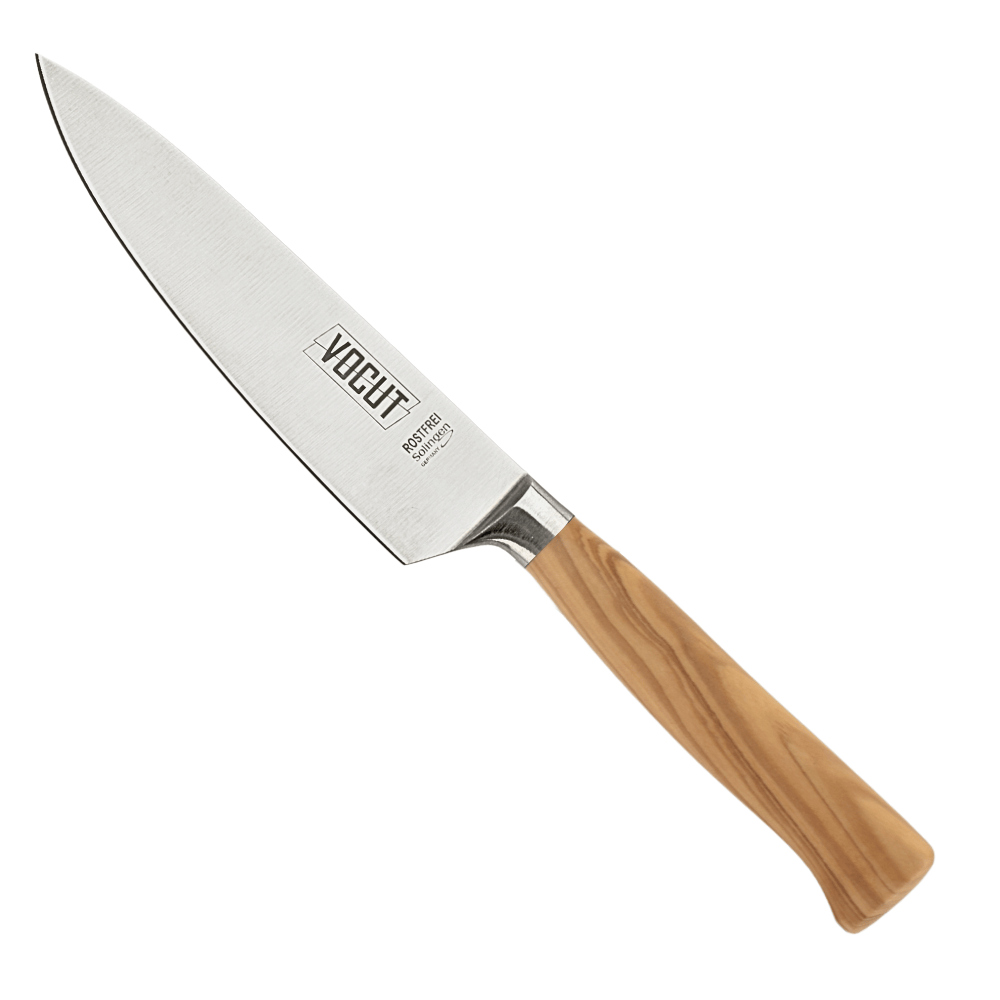
A chef’s knife with an 18 to 21 cm blade is the most important knife in any kitchen. You use it to cut meat, vegetables, herbs and almost everything else. It’s the all-rounder you’ll have in your hand every day.
Look for high-quality stainless steel and a handle that sits securely in your hand. Our VOCUT chef’s knives from Solingen are made from 1.4116 steel with a hardness of 56–58 HRC. Sharp enough for everyday use, tough enough to last for years. You’ll find more about steel in our Knife Glossary.
2. The paring knife – for precision
A paring knife with an 8 to 10 cm blade is the perfect partner for the chef’s knife. For fine work – peeling potatoes, hulling strawberries, picking herbs – the small knife is the better tool. Anyone who cooks regularly soon notices when they reach for it.
3. The bread knife – indispensable
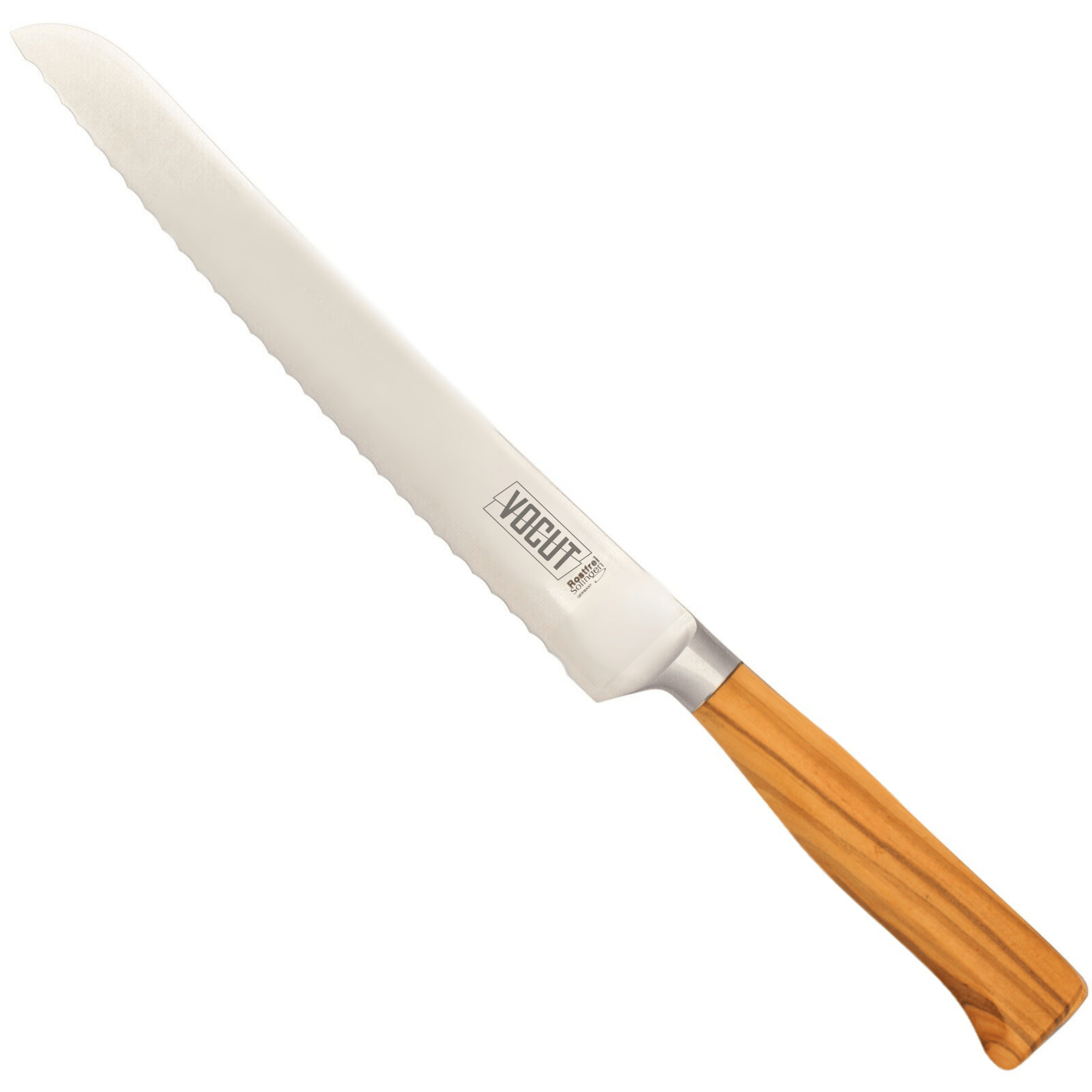
The serrated bread knife is the one type of knife where a chef’s knife really struggles. Crusty bread, hard crusts, tomatoes with firm skins – only a serrated edge does a good job here. You don’t need it every day, but when you do, nothing else will do.
What you don’t need
Knife sets with seven, nine or twelve knives sound tempting – the price per knife looks low. But experience shows that such sets usually contain one or two useful knives, and the rest is filler. A carving knife, a cheese knife, a tomato knife – nice additions, but not where to start.
Better to invest in one really good chef’s knife than in five mediocre ones.
The optional fourth knife
If you regularly break down meat or larger cuts, you’ll benefit from a butcher knife. If you prepare a lot of fish, reach for a filleting knife. That decision depends on how you cook.
You’ll find an overview of all knife types in our Knife Glossary.
How do I recognise a good knife?
Three criteria count:
- Steel: Stainless steel with sufficient hardness (at least 55 HRC). Too soft and it blunts quickly; too hard and it’s difficult to resharpen.
- Handle: Does the knife sit securely and comfortably in your hand? The handle decides whether you tire quickly or can work precisely.
- Origin: Knives from Solingen have stood for quality for centuries. “Made in Solingen” is a protected designation of origin – more on this in our guide What does “Made in Solingen” mean?
Conclusion: quality over quantity
Three good knives from Solingen beat a full knife block of mediocre quality by a long way. Anyone who has ever held a truly sharp, well-balanced knife understands the difference immediately.
Still have questions about choosing a knife? Take a look at our frequently asked questions or write to us directly.